
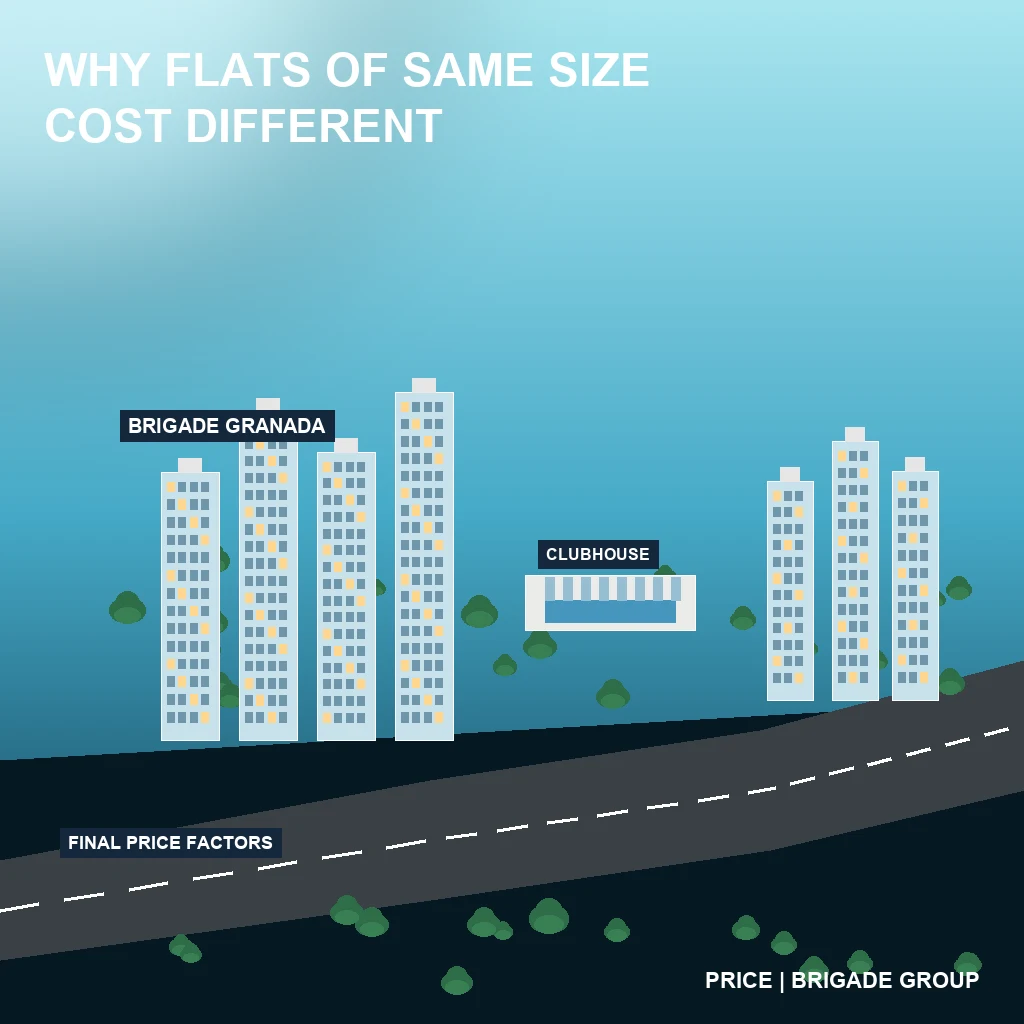
Two flats with the exact same square footage often have completely different final prices because a home’s total cost depends on much more than just its size. Factors like which floor the flat is on (floor rise charges), corner placement, usable carpet area, natural sunlight, view options, parking allotment, and preferential location charges (PLC) directly change the final cost. On top of this, the builder’s brand quality, buying stage (pre-launch versus ready-to-move-in), and extra taxes mean two 1,200 sq. ft. flats—even inside the exact same building tower—can have a price gap of lakhs or even millions of rupees.
In modern high-rise apartment complexes, identical flats on different floors never carry the same price tag. Builders apply an extra fee called a Floor Rise Charge. This is a small extra cost per square foot added for every single floor you go higher.
Two homes can both be sold as "1,500 sq. ft." on paper, but the actual living space you get inside can be very different.
Simple Tip: Always check the carpet area ratio. A flat that gives you 80% usable space will cost more per square foot than a flat with only 65% usable space—even if both claim to be 1,500 sq. ft. overall.
Where your flat is situated within the complex creates major price gaps. Builders charge an extra fee known as a Preferential Location Charge (PLC) for units that sit in prime spots.
For instance, at premium township developments like Brigade Granada on Whitefield–Hoskote Road, flats designed with open green views, smart ventilation, and optimized Vastu orientations command higher preference and value due to their superior everyday comfort.
When you decide to buy your home plays a huge role in the final check you sign.
Even in neighboring housing projects, two flats with identical square footage will carry different costs based on who builds them.
Paying a brand premium means lower maintenance headaches and better rental demand in the future.
The base price printed on a brochure is almost never the total amount you pay. Additional required costs include:
Even inside the same tower, prices differ due to floor height (floor rise charges), corner spots, scenic views (park vs. road), and Vastu direction (PLC charges).
Floor rise charges are small per-square-foot fees added for every floor above the ground level. Higher floors cost more because they offer better views, cleaner air, less traffic noise, and more privacy.
Yes. Two flats with the same total super built-up area can have different usable living spaces based on balcony sizes and wall layouts. Flats with larger carpet areas offer more real value and cost more.
PLC is an extra fee charged by builders for flats placed in premium locations inside the complex—such as corner units, pool-facing homes, garden views, or East-facing entry spots.
Ready-to-move flats carry zero waiting period or construction delay risks, so builders charge a higher price. Pre-launch buyers take on a time wait in return for lower initial prices.
Yes. An open parking slot costs less, while a covered basement slot, double-deck parking, or a slot placed right next to the elevator lobby adds extra charges to your bill.
Reputable builders use high-quality building materials, deliver projects on schedule, and offer grand amenities. This trust guarantees higher resale value and better long-term durability, which commands a higher price tag.

 24/7 Support
 Free Site Visit
 Unmatched Price