
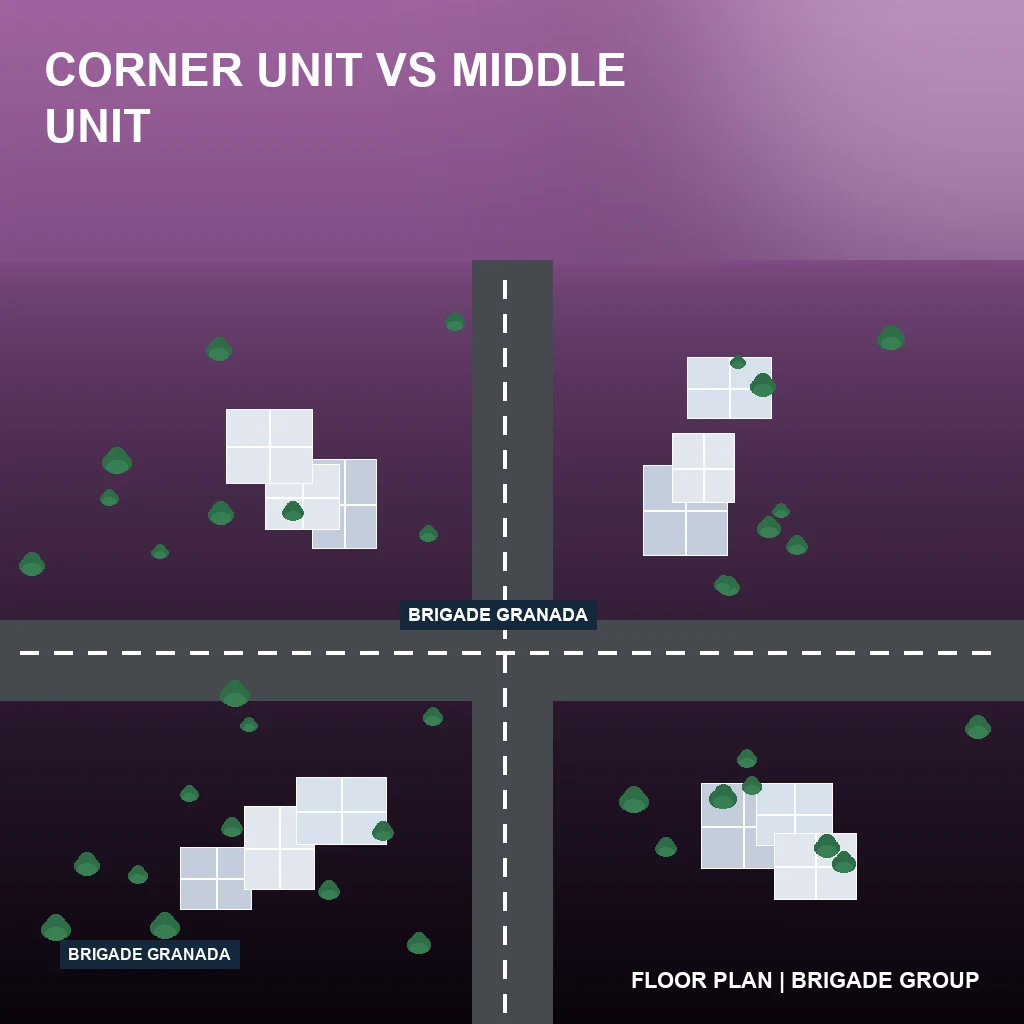
If you are planning to buy a flat, picking between a corner unit and a middle unit mostly comes down to what matters more to you: extra space and privacy, or saving your hard-earned money. A corner unit works better if you want plenty of sunlight, fresh air flowing from multiple sides, quieter surroundings with fewer common walls, and higher resale value down the line.
On the other hand, a middle unit is a smarter choice if you want a budget-friendly house price, lower monthly current bills, and a cozy home that is easy to maintain. Neither option is right or wrong—it simply depends on your personal lifestyle and budget.
Before we look into the main points, here is a simple breakdown of how these two flat choices compare side by side:
| What to Look For | Corner Unit | Middle Unit |
|---|---|---|
| Shared Walls | Only 1 or 2 walls | Shared with neighbors on 2 or 3 sides |
| Sunlight | Excellent (Windows on 2–3 walls) | Moderate (Windows mainly on 1 side) |
| Fresh Air & Breeze | Very high cross-ventilation | Normal airflow |
| Buying Cost | Costs 5% to 15% extra (PLC fees) | Cheaper, base builder price |
| Monthly Power Bills | Slightly higher | Lower (Protected from extreme heat) |
| Privacy & Noise | Very quiet (Fewer people walking past) | Moderate (Close to lifts and stairs) |
| Resale Value | High demand, quick to sell | Good demand for budget buyers |
When you live in a corner flat, you get outer walls on two or three sides. This means daylight floods into your rooms right from early morning till evening. You can open windows on opposite sides to let a cool breeze cross right through the house.
Middle flats usually have open windows on just one outer side. You still get decent natural light during peak afternoon hours, but you won't get that fresh, multi-directional airflow.
Nobody likes dealing with noisy neighbors. With a corner flat, you share only one common wall with the next door family. Plus, since your home is tucked away at the very end of the corridor, you won't hear neighbors talking or walking past your main door all day.
Middle flats are squeezed between two other homes. Because they sit closer to the lifts and common staircases, you might hear a bit more foot traffic outside your entrance.
Here is an unexpected catch: corner homes get full exposure to direct heat in summer and cold weather in winter. Your AC might have to run longer to keep the rooms cool, which can bump up your monthly power bills.
Middle units get natural insulation because they are surrounded by other flats on both sides. They stay cooler in hot months and cozy during winter, keeping your electricity bills well under control.
Builders often put their biggest floor plans—like 3 BHKs or 4 BHKs—on the corners. This gives you extra room for wide L-shaped balconies or corner sit-outs where you can put a couple of tea chairs.
Middle units stick to straightforward, neat rectangular layouts. There are no odd corners, making it super easy to plan your interior cupboards, wardrobes, and furniture without wasting square feet.
Because so many buyers ask for corner flats, builders charge extra under "Preferred Location Charges" (PLC). However, if you decide to sell the property after a few years, corner flats easily command higher prices in the market.
Middle flats let you step into premium apartment communities at a much lower cost. They are great for first-time home buyers or people who want a solid investment without stretching their home loan limits.
In older buildings, middle flats were often dark and gloomy. But modern real estate projects have completely changed how towers are built.
Take a look at Brigade Granada on the Whitefield–Hoskote Road in East Bangalore. The project is designed with a massive 80% open green space all around the towers:
Builders add a Preferred Location Charge (PLC) on corner flats because these units offer better views, extra windows, and higher market demand from buyers.
Not at all. While light enters mostly from one side, well-designed flats get plenty of daytime sunlight through the main balcony and utility areas.
Middle units often deliver better rental returns compared to what you spend. You pay less upfront to buy the flat, but tenants still pay a good monthly rent because current bills stay lower.
Outer walls take direct rain and strong winds during storms, but good quality modern windows easily block out external weather noise.
Yes, having two or three walls exposed to the sun makes rooms hotter in summer, meaning your AC works slightly harder than it would in a middle unit.
Yes, corner flats usually sell much faster because secondary home buyers actively search for better privacy and extra sunlight.
At Brigade Granada, towers are spaced far apart with 80% open green space, ensuring middle units receive plenty of fresh air and clear views of the gardens.

 24/7 Support
 Free Site Visit
 Unmatched Price